The type of flooring installed in any space can have a great impact on how it looks, feels, and performs. Whether you’re renovating your home, upgrading your garage or improving a commercial area, you want a floor that is able to take the everyday wear and tear without ruining the overall look. It’s there that epoxy flooring has found its appeal.
Epoxy flooring is durable, chemical- and stain-resistant, smooth, easy-to-maintain and easy to maintain. It is a versatile flooring option that can be used in residential, commercial, and industrial applications.
So, why use epoxy floors for your home or business? Let’s take a look at its main features, benefits, applications, and considerations.
What is Epoxy Flooring?
Epoxy flooring is a type of surface coating that is formed by the mixing and binding of epoxy resin and a hardener. These elements combine, and the floor surface is formed through a chemical reaction when these elements are mixed and placed on a properly prepared floor base.
The final coating forms a continuous surface that is placed on top of the existing concrete floor. Epoxy floorings can be various colors, textures, patterns, and finishes depending on the product and application.
Epoxy is a popular choice in garages, warehouses, factories, retail facilities, workshops, hospitals, offices, and other settings where it is crucial to have a durable floor.
What makes Epoxy Flooring a Hot Choice?
Epoxy flooring is popular in many ways, but one of the prime reasons is its ability to give the flooring both function and appearance. Concrete floors over time can become stained, cracked, dusty, and hard to clean. Epoxy coatings can offer an additional barrier of protection that will help keep the surface easier to clean and resist daily use.
Epoxy flooring is also customizable. There are different colors, finishes, decorative flakes, metals, and other design options that property owners can choose so that they fit the space they have.
The Biggest Advantages of Epoxy Flooring?
Does Epoxy Flooring offer Long-Lasting Durability?
Yes. Epoxy flooring has one of the greatest benefits of being durable. With proper installation, a properly installed epoxy surface will resist daily traffic, vehicle traffic, equipment, and use.
This can be especially beneficial in garages, warehouses, workshops, and industrial buildings where floors are used heavily.
But there are other factors related to surface preparation, product quality, installation, traffic, and maintenance that will affect the life of an epoxy floor.
Can Epoxy Flooring Withstand Stains and Chemicals?
Epoxy flooring offers a very hard-wearing surface that may help to prevent many typical stains, oils, and chemicals from damaging the concrete. This feature is advantageous when used in garages, workshops, factories, and other areas where spills can happen.
The appropriate epoxy system can be selected for the required chemical resistance for a specific application. The floor coating should be selected depending on the type of substances and conditions the floor will be exposed to.
Easy to Clean Epoxy Flooring?
Epoxy flooring is easy to clean as it is smooth and seamless. There is no need to clean up dirt, dust, and many spills when using this type of floor over traditional floor materials that contain deep cracks and joints.
Regular sweeping and mopping can help maintain the appearance of the floor. Promptly cleaning spills can also help to prevent staining and keep the coating.
Does Epoxy Flooring Enhance the Look of an Area?
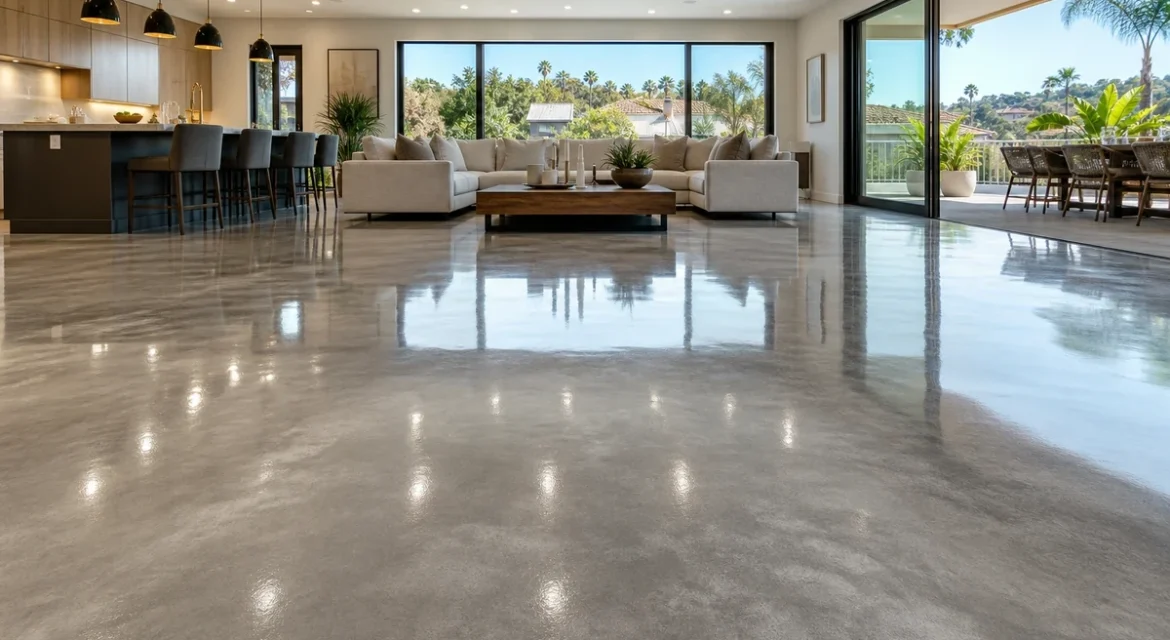
Yes. Many different colors and finishes can be used for epoxy flooring. It offers property owners the option to choose an appearance appropriate for the function and style of the space.
Decorative flakes can add texture to the designs, and metallic effects can result in a more distinctive look. Even simple solid-color coatings can help provide a clean and professional appearance for garages, workshops, and other commercial properties.
Does Epoxy Flooring Make Floors Safer?
Some epoxy flooring systems can be textured or slip-resistant to provide better traction. It can be very helpful when working in places where water, oil, or other liquids may be present.
But the correct slip resistance value will depend on the environment and the coating system used. Installing and maintaining floors properly are also essential to ensuring floors are safe.
What Can Epoxy Flooring Be Used For?
The durability and versatility of epoxy floors make them suitable for various applications, including commercial spaces, industrial facilities, healthcare and hospital areas, retail stores, educational institutions, and manufacturing plants.
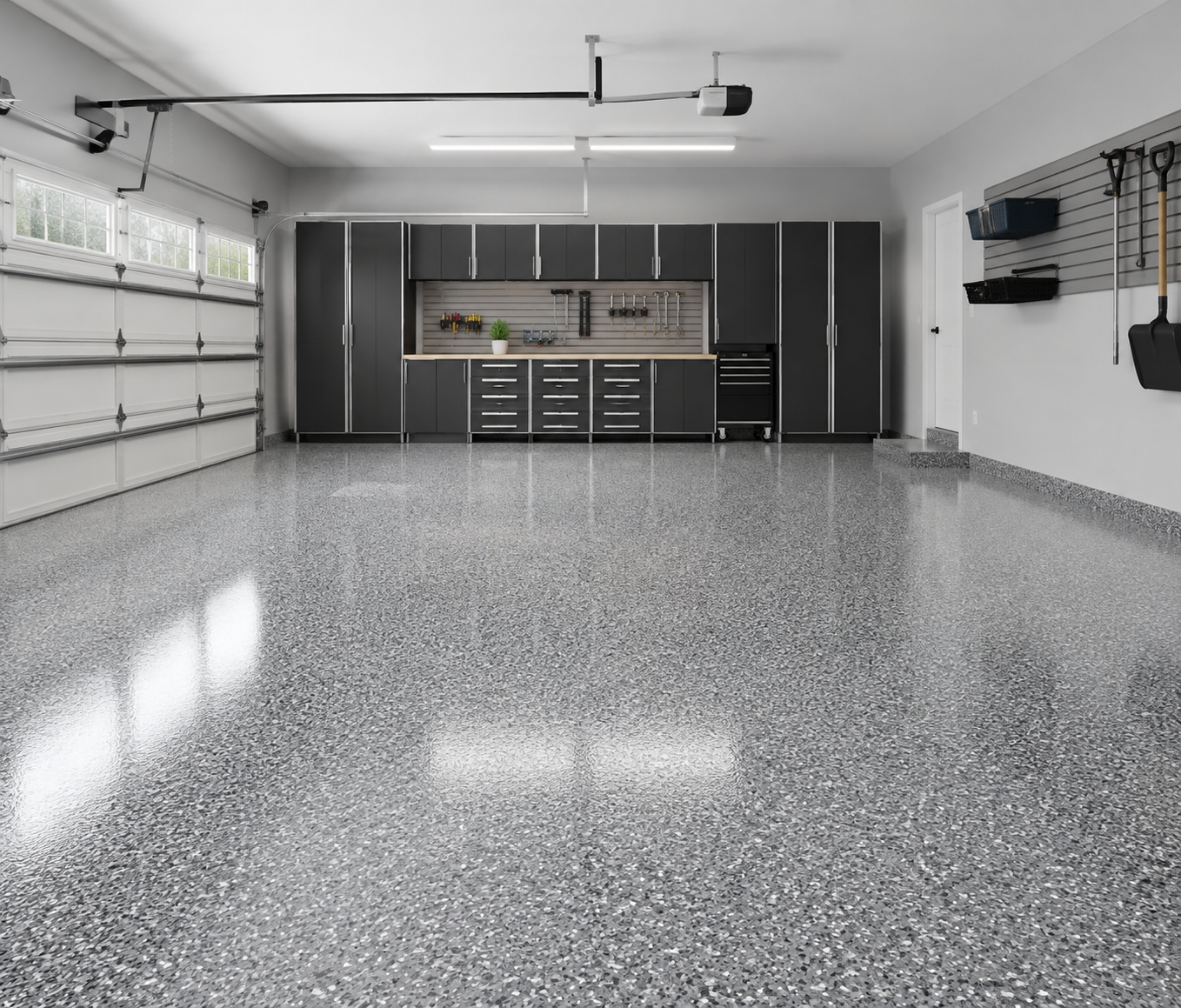
It is commonly used in garages, basements, utility rooms, and workshops in homes. These areas can be more practical and attractive as a result of their easy-to-clean surface.
Epoxy floors can be a good choice for commercial establishments, such as retail stores, offices, restaurants, showrooms, and other areas with heavy foot traffic.
Additionally, epoxy coatings can be used in industrial settings like warehouses, factories, workshops, and production facilities, where heavy foot traffic, machinery, spills, and harsh working environments can pose challenges.
What Does Epoxy Flooring Have to Offer Compared to Traditional Concrete?
Although concrete is strong and versatile, an untreated concrete floor can be susceptible to dust, staining, surface damage, and moisture issues. When applied over concrete, epoxy flooring can provide a protective coating and help to give a more uniform finished surface.
Epoxy may offer greater design options than plain concrete, too. But not all floors are suitable for epoxy. The existing condition of the concrete, moisture, the amount of anticipated traffic, and environmental conditions should be assessed prior to installation.
Things to Consider Before Installing an Epoxy Floor?
There are a number of things to take into account before deciding to install an epoxy floor.
Does the Existing Floor Meet the Requirements?
The concrete surface should be prepped properly before application of epoxy. Existing cracks, contamination, damaged surfaces, and more might need to be treated first.
If the preparation is performed incorrectly, it may result in various defects, including peeling, bubbling, or early failure of the coating.
Which Type of Epoxy Do You Need?
There are various types of epoxy systems for various applications. Garage floors for residential properties may have different needs than industrial facilities or commercial kitchens.
When installing a system, it’s important to take into account the expected traffic, chemical exposure, temperature, moisture, and expected appearance of the space.
Does Installation Require Professional Expertise?
While there are a number of DIY epoxy flooring products, sometimes it is beneficial to get professional help for larger projects or when they are more demanding.
You can have professionals determine the existing floor, prepare it appropriately, determine the right material, and apply it to the floor correctly. The quality of the final result of an epoxy floor can be greatly affected by the way it is prepared and installed.
How Can You Maintain Epoxy Flooring?
Most of the time, epoxy flooring is easy to maintain. Use a broom, soft brush, or appropriate vacuum to periodically dust and remove dirt. Use a soft cleaning solution and an appropriate mop for better cleaning.
Avoid using harsh chemicals or abrasive cleaning tools unless they are specifically recommended for the particular epoxy system.
Care should be taken in handling heavy furnishings and equipment to avoid any scratching or damage to the surface.
Should Epoxy Flooring Be Invested?
Epoxy flooring can be a viable option for many home and business flooring needs in the long run. It is also extremely durable, requires little maintenance, offers many customization options, and withstands regular use, making it ideal for a variety of applications.
The overall value will depend on the value of the materials, existing condition of the floor, method of installation, projected lifespan, and maintenance.
Property owners should not just opt for epoxy because it is popular, but only because the properties of the epoxy are suitable for their space.
How Can You Choose the Right Epoxy Flooring?
The first step in selecting the appropriate epoxy floor is to determine how the floor will be used. Take into account traffic, chemical and moisture exposure, temperature requirements, appearance, and maintenance requirements.
It is also necessary to consider coating thickness, coating options, slip resistance, and installation requirements. When working with an experienced flooring professional, he or she will be able to help you identify which system is the right one for your project.
Conclusion
For homeowners and businesses seeking a long-lasting, aesthetically pleasing, and low-maintenance flooring solution, epoxy flooring may be a great option. It is stain- and abrasion-resistant, can be customized with a variety of colors and finishes, and can be used in any number of applications, including residential garages and demanding commercial and industrial applications.
The most important aspects of achieving the best results are the correct preparation of the floor, selection of the appropriate epoxy system, and proper installation. When designed properly, epoxy flooring can offer a functional and aesthetically pleasing floor that satisfies your property’s requirements.
Frequently Asked Questions About Epoxy Flooring
1. Is epoxy flooring good for home garages?
Yes. Home garages are often the setting for epoxy flooring, as it can offer a robust and simple-to-clean surface that is resistant to numerous typical stains and spills.
2. Is custom epoxy flooring cheaper than laminate or tile floors?
The properties of epoxy flooring, including its lifespan, depend on the quality of installation, the preparation of the floor, traffic, environmental conditions, and maintenance. If it is properly selected and installed, a system can be expected to last for a long time.
3. How easy is it to maintain epoxy flooring?
Yes. Cleaning its surface is relatively easy due to its seamless surface. Clean the floor regularly with a broom and mop to keep the floor clean and presentable.
4. Can epoxy flooring be used outdoors?
While some epoxy products may be able to be used outdoors for specific applications, ordinary epoxy can be impacted by extended UV exposure and weather. Product should be chosen for the environment it’s intended to be used in.
5. Is it necessary that epoxy flooring be installed professionally?
It is not always necessary to hire a professional installer for small jobs or non-complicated applications, but for larger and more complex installations, a professional installer can be useful. Good surface preparation and application are crucial to a long-lasting result.